
Spotify: Spotify: Music and Podcasts
Spotify Ltd.
September 1, 2021
Varies with device
Varies with device
Varies with device

Description
Spotify: Music and Podcasts — Complete Review, Features, Privacy, Streaming & User Guide


Spotify: Music and Podcasts is one of the most popular audio-streaming applications, bringing music, podcasts, audiobooks, personalized playlists, recommendations, and discovery tools together in one platform.
What makes Spotify particularly interesting in 2026 is that the service is moving beyond simply playing songs. Spotify is increasingly using personalization and AI-powered features to help listeners discover and shape what they hear. In July 2026, Spotify began gradually rolling out a beta Talk to Spotify experience for eligible Premium users, allowing them to type or speak requests about music, podcasts, audiobooks, and their listening history. (Spotify)
This comprehensive guide looks at the Spotify experience, including its music library, playlists, podcasts, personalization, offline listening, Premium features, privacy, performance, advantages, disadvantages, and comparisons with competing services.
What Is Spotify?
Spotify is a digital audio-streaming service that allows users to discover and listen to music, podcasts, and audiobooks.
The platform can be used on smartphones, tablets, computers, smart TVs, speakers, cars, gaming devices, and other supported hardware.
At its simplest, the Spotify experience is:
Search → Choose something to listen to → Play → Discover more
But the platform has evolved considerably beyond that basic workflow.
Spotify uses listening behavior and personalization to recommend music and other audio that may match your interests.
Spotify Music Experience
Music remains the foundation of Spotify.
You can search for:
- Artists
- Albums
- Songs
- Genres
- Playlists
- New releases
- Music charts
- Moods
- Activities
This makes Spotify useful whether you already know exactly what you want to hear or simply want something new.
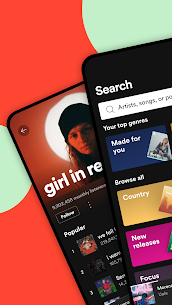
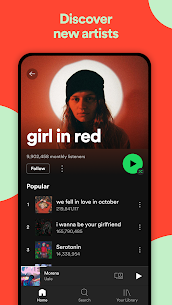
One of the things I like about this approach is that Spotify doesn’t require you to build your entire library manually.
You can start with a single artist and quickly discover related music.
Spotify Playlists
Playlists are one of Spotify’s strongest features.
You can create your own playlists or listen to playlists created by Spotify, artists, publishers, and other users.
A playlist can be built around practically anything:
- Workout music
- Relaxation
- Study sessions
- Road trips
- Party music
- Favorite songs
- Specific genres
- A particular mood
Spotify’s personalization makes playlists particularly useful because recommendations can evolve based on your listening habits.
Discover Weekly
Discover Weekly is one of Spotify’s best-known personalized discovery features.
It attempts to introduce listeners to songs they may not have heard before based on their listening patterns.
For users who enjoy discovering new artists, this can become one of the most valuable parts of Spotify.
The quality of recommendations isn’t identical for everyone, though.
If your listening history is limited or extremely repetitive, recommendations may feel less interesting.
Release Radar
Release Radar focuses more heavily on new music.
It can help users discover recent releases from artists they follow or artists Spotify thinks may be relevant to their listening habits.
This is especially useful if you follow many musicians and don’t want to manually check every artist’s page for new releases.
Spotify DJ
Spotify has also experimented with more conversational and personalized listening experiences.
Its DJ feature is designed to curate music based on your taste while introducing different artists and genres.
Spotify describes DJ as a way to play favorites you already love while also introducing new music based on your taste. (Spotify)
For me, this type of feature is most useful when I know the mood I want but don’t want to spend time building a playlist manually.
Spotify’s AI-Powered Listening Features in 2026
Spotify’s personalization strategy has become more ambitious in 2026.
The company announced a beta Taste Profile experience that gives eligible Premium listeners more visibility and control over how Spotify understands their tastes. The feature began rolling out in New Zealand in beta and considers listening across music, podcasts, and audiobooks. (Spotify)
Spotify has also introduced Talk to Spotify, allowing eligible Premium users to type or speak natural-language requests.
For example, you can ask for a particular mood, request music based on previous listening, ask about an artist, or interact with podcasts and audiobooks. (Spotify)
Availability is important here: these newer AI features are not necessarily available to every user or in every country.
Spotify Podcasts
Spotify is no longer simply a music application.
Podcasts are now a major part of the platform.
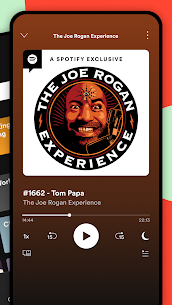
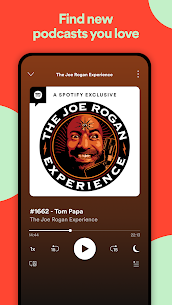
You can browse podcasts by category, follow shows, save episodes, control playback speed, download supported episodes, and listen across supported devices. (Spotify)
Popular podcast categories include:
- News
- Technology
- Business
- Comedy
- Education
- True crime
- Sports
- Culture
- Health and fitness
- Entertainment
Some podcasts also include video.
Podcast Discovery
Finding a good podcast can sometimes be more difficult than finding a song.
Spotify addresses this through recommendations, categories, followed shows, personalized surfaces, and newer prompt-based discovery features.
In April 2026, Spotify expanded Prompted Playlist to podcasts, allowing eligible Premium users in selected markets to describe the type of podcast content they want and receive a personalized lineup. (Spotify)
This is an interesting development because it changes discovery from:
“What does Spotify recommend?”
to:
“I know what kind of content I want—help me find it.”
Video Podcasts
Spotify has increasingly invested in video podcasts.
According to Spotify’s May 2026 announcement, more than 500 million users had streamed a video podcast, representing nearly 50% year-over-year growth at the time of the announcement. (Spotify)
This makes Spotify more competitive with platforms where video is central to podcast consumption.
For listeners, video can add value when the podcast depends on:
- Visual demonstrations
- Interviews
- Facial expressions
- Studio interactions
- Video-specific content
For audio-only shows, however, traditional podcast playback remains perfectly adequate.
New Podcast Interaction Features
Spotify has been adding interactive tools to podcasts.
In 2026, the company announced a feature allowing eligible Premium mobile users in selected markets to ask questions about the podcast they’re listening to and receive answers without leaving the Spotify experience. (Spotify)
This could be particularly useful for educational or informational podcasts.
Instead of stopping playback and searching the web for context, the listener can ask about something mentioned in the episode.
As with other AI-powered features, users should treat generated answers as assistance rather than automatically assuming every response is perfect.
Spotify Audiobooks
Spotify has expanded beyond music and podcasts into audiobooks.
The platform has also been developing personalized audiobook discovery.
In August 2026, Spotify announced Prompted Playlist for audiobooks, allowing eligible Premium users in selected markets to describe the kind of books they want and receive personalized recommendations. (Spotify)
Spotify also introduced improvements for discovering books within a series, including series pages and recommendations for the next title after finishing a book. (Spotify)
This makes Spotify increasingly resemble a broader audio-content platform rather than a traditional music streaming app.
Offline Listening
Offline listening is one of the most practical features for Premium subscribers.
Supported content can be downloaded so you can listen without an active internet connection.
This is particularly useful for:
- Flights
- Road trips
- Commuting
- Areas with weak reception
- Saving mobile data
Spotify’s support documentation also confirms that podcasts and shows can be downloaded for offline listening. (Spotify)
One important point: downloaded content doesn’t mean you own the music or podcast files permanently. The downloads are designed for playback through Spotify.
Spotify Free vs Premium
Spotify operates with different subscription experiences depending on the market and plan.
The basic distinction is generally:
| Feature | Free | Premium |
|---|---|---|
| Music streaming | Yes | Yes |
| Podcasts | Yes | Yes |
| Personalized recommendations | Yes | Yes |
| Advertising | Yes | Reduced/removed for music depending on plan |
| Offline music | Limited | Yes |
| Higher control over playback | Limited | More control |
| Premium-only features | No | Yes |
| AI/beta features | Limited/varies | Selected Premium access |
Exact features, pricing, playback rules, and availability can vary by country and plan.
Spotify’s podcast support documentation notes that Premium removes ads that interrupt music, but podcasts may still contain advertising, host-read promotions, or sponsorship messages. (Spotify)
Spotify Testing Checklist
| Test Area | What to Check | Practical Verdict |
|---|---|---|
| App startup | Time required to reach the Home screen | Generally quick on modern devices |
| Music playback | Stability during normal streaming | Strong with reliable internet |
| Search | Finding artists, albums and podcasts | One of the strongest features |
| Recommendations | Relevance to listening habits | Improves with continued use |
| Playlist creation | Ease of organizing music | Excellent |
| Podcast playback | Playback and speed controls | Very good |
| Offline mode | Downloaded content playback | Extremely useful |
| Battery usage | Long listening sessions | Usually reasonable, but varies |
| Data consumption | Streaming music/video | Depends heavily on quality and content |
These aren’t laboratory measurements. Actual performance depends on your phone, network, audio quality settings, operating system, and current Spotify version.
My Practical Experience With Spotify
The biggest strength of Spotify, in my view, is discovery.
If I already know the exact song I want, almost any major streaming service can handle that task.
Spotify becomes more interesting when I don’t know what I want.
I can start with an artist, playlist, genre, or mood and let the recommendation system take over.
The downside is that personalization can sometimes become too comfortable.
If you repeatedly listen to the same styles, Spotify can continue reinforcing similar choices.
That’s why I think it’s worth deliberately exploring unfamiliar artists and genres occasionally.
The best recommendation system isn’t useful if you never step outside your existing listening habits.
Spotify Across Devices
Spotify’s multi-device approach is another major advantage.
You can use Spotify on:
- Android phones
- iPhones
- Tablets
- Windows PCs
- Macs
- Web browsers
- Smart TVs
- Smart speakers
- Cars
- Gaming systems
- Other supported devices
This makes it easy to start listening in one environment and continue elsewhere.
Spotify Connect
Spotify Connect helps bridge different devices.
Instead of playing audio exclusively through your phone’s speaker, you can control playback on compatible speakers and other devices.
This is especially useful at home.
For example, you can browse music on your phone while sending playback to a compatible speaker.
Spotify Privacy
Personalization is central to Spotify’s experience.
The service uses information about your listening behavior to help shape recommendations and other personalized experiences.
Spotify’s 2026 announcements show how this personalization is expanding across music, podcasts, and audiobooks. (Spotify)
The newer conversational features make privacy considerations even more relevant because users can provide natural-language requests to the service.
Spotify’s support documentation specifically advises users that Talk to Spotify is an AI-powered feature and provides information about how data is managed and shared. (Spotify)
For that reason, users should avoid putting highly sensitive personal information into optional AI prompts unless they understand how the feature handles that information.
Is Spotify Safe?
For normal music and podcast listening, Spotify is a mainstream platform with established account and privacy controls.
However, users should still follow basic digital-safety practices:
- Use a unique password.
- Enable available account-security protections.
- Don’t share account credentials.
- Be careful with suspicious links.
- Review connected third-party applications.
- Be cautious when interacting with unfamiliar profiles or content.
- Review privacy settings periodically.
The biggest risks for most users aren’t likely to come from simply playing a song; they are more likely to involve account security, scams, inappropriate content, or excessive sharing of personal information.
Spotify vs YouTube Music
YouTube Music is one of Spotify’s strongest competitors.
| Feature | Spotify | YouTube Music |
|---|---|---|
| Music streaming | Excellent | Excellent |
| Playlists | Excellent | Excellent |
| Music discovery | Excellent | Strong |
| Podcasts | Strong | Available/varies |
| Video ecosystem | Growing | Excellent |
| Personalized recommendations | Excellent | Excellent |
| Desktop experience | Strong | Strong |
| Best for | Music + podcasts ecosystem | Music + YouTube ecosystem |
Spotify has a particularly polished approach to playlists and music discovery.
YouTube Music benefits from its connection to the broader YouTube ecosystem.
Spotify vs Apple Music
| Feature | Spotify | Apple Music |
|---|---|---|
| Music library | Excellent | Excellent |
| Discovery | Excellent | Strong |
| Personalized playlists | Excellent | Strong |
| Podcasts | Major focus | Apple ecosystem |
| Cross-platform | Excellent | Strong |
| Apple-device integration | Good | Excellent |
| Social/discovery features | Strong | Good |
| Best for | Discovery + multi-platform use | Apple ecosystem |
For users heavily invested in Apple’s ecosystem, Apple Music has obvious advantages.
Spotify remains particularly attractive for its recommendations, playlists, and broad device support.
Spotify vs Amazon Music
| Feature | Spotify | Amazon Music |
|---|---|---|
| Music | Excellent | Excellent |
| Personalized discovery | Excellent | Strong |
| Podcasts | Strong | Yes |
| Smart-device integration | Strong | Excellent with Amazon ecosystem |
| Playlist experience | Excellent | Strong |
| Best for | Discovery and playlists | Amazon ecosystem users |
What I Like About Spotify
Excellent music discovery
Spotify is particularly good at helping listeners find music they didn’t specifically search for.
Strong playlists
The combination of editorial and personalized playlists makes the platform easy to use.
Podcasts and music in one place
You don’t need separate applications for these two types of audio.
Cross-device support
Spotify works across a wide range of devices.
Offline listening
Premium downloads are extremely useful for travel and unreliable connections.
Personalization
Spotify increasingly adapts to individual listening habits.
What Could Be Better
Recommendations can become repetitive
The algorithm can sometimes reinforce familiar listening habits.
Free listening has limitations
Users who don’t subscribe to Premium may encounter advertising and other restrictions depending on their market.
Features vary by country
Some of Spotify’s newest features are initially available only in selected markets.
AI features are still evolving
New conversational and generative features can change and may occasionally produce imperfect results.
Podcasts can contain advertising
Premium music ad-free listening doesn’t necessarily mean every podcast is free from advertising. (Spotify)
Who Should Use Spotify?
Spotify is particularly well suited to people who:
- Listen to music every day.
- Enjoy discovering new artists.
- Like personalized playlists.
- Follow podcasts.
- Want music and spoken audio in one application.
- Frequently switch between devices.
- Want offline listening.
- Prefer a large cross-platform ecosystem.
It may be less appealing if you:
- Already have another streaming service that fits your needs perfectly.
- Primarily consume music through a different ecosystem.
- Don’t care about personalized recommendations.
- Want to minimize subscription services.
Practical Spotify Tips
Build several playlists
Don’t put everything into one giant playlist.
Create separate collections for different moods and activities.
Use discovery features
Try Discover Weekly, Release Radar, and personalized recommendations instead of repeatedly listening to the same albums.
Download before traveling
If you expect poor connectivity, prepare your playlists and podcasts in advance.
Manage audio quality
Higher-quality streaming can consume more data.
Explore podcast categories
Don’t rely only on the Home page.
Review AI features before using them
If you use conversational or personalized AI tools, understand what information you’re providing.
Keep your account secure
Never give your password or verification information to another person.
Pros and Cons
| Pros | Cons |
|---|---|
| Excellent music discovery | Free experience has limitations |
| Huge music catalog | Recommendations can become repetitive |
| Strong playlists | Some features vary by market |
| Podcasts | Podcasts may contain advertising |
| Audiobooks | Some newer features are Premium-only |
| Offline listening with Premium | Subscription costs vary by region |
| Cross-platform support | AI features are still evolving |
| Strong personalization | Personalization requires listening data |
Frequently Asked Questions
Is Spotify free?
Spotify offers a free listening option in many markets, alongside Premium subscriptions. Features and limitations depend on your country and plan.
Is Spotify good for podcasts?
Yes. Podcasts are now a major part of Spotify, with discovery, saving, downloads, playback-speed controls, and video podcasts supported in the platform. (Spotify)
Can Spotify work offline?
Premium users can download supported content for offline listening.
Is Spotify better than YouTube Music?
It depends on your priorities. Spotify is particularly strong for playlists and music discovery, while YouTube Music benefits from YouTube’s enormous video ecosystem.
Does Spotify have AI features?
Yes. Spotify has been expanding AI-powered personalization and conversational features. Availability depends on eligibility, location, language, and subscription status. (Spotify)
Can I talk to Spotify?
Eligible Premium users can access the beta Talk to Spotify feature in selected markets and languages, using voice or text to shape listening and ask questions about music, podcasts, audiobooks, and listening history. (Spotify)
Does Spotify have audiobooks?
Yes. Audiobooks are part of Spotify’s expanding audio ecosystem, with additional discovery features being introduced in 2026. (Spotify)
Does Spotify remove podcast ads for Premium users?
Not necessarily. Spotify states that while Premium removes ads that interrupt music listening, podcasts can still contain advertising, host-read endorsements, or sponsorship messages. (Spotify)
Final Verdict
Spotify has evolved far beyond being a simple music player.
Music remains its foundation, but podcasts, audiobooks, personalization, playlists, discovery tools, and AI-powered experiences are increasingly important parts of the platform.
Its greatest strength is the combination of content and discovery.
You can search for something specific, but you can also simply press play and allow Spotify to build an experience around your listening habits.
The 2026 developments make that concept even more interesting. Spotify is experimenting with conversational listening, prompted playlists, personalized podcasts, and broader AI-assisted discovery. (Spotify)
The main disadvantages are the limitations of the free tier, regional differences in features, advertising in some podcast content, and the possibility that personalization can become repetitive.
Final Take
Best for: Music discovery, playlists, podcasts and personalized listening
Main strength: Excellent personalization and discovery
Biggest weakness: Free-tier limitations and feature differences by market
Best alternative: YouTube Music or Apple Music depending on your ecosystem
Overall: One of the strongest all-in-one audio platforms for music and podcasts in 2026.
Spotify’s biggest advantage is simple: you can arrive knowing exactly what you want to hear—or with no idea at all—and the platform gives you a way forward.
What's new
We’re always making changes and improvements to Spotify. To make sure you don’t miss a thing, just keep your Updates turned on.
Images

Related apps








Most rated apps
Most viewed apps
-
 PIP Camera-editor de fotos 1.5Varía según el dispositivo. Fotoable,Inc. 10MB
 -
 Grok vs Claude: Complete Comparison, Features, Coding, Reasoning, Writing, Research, Pricing and More
 -
 Gemini NotebookVaries with device Google LLC 38.3 MB
 -
 FaceLab: Future Face Aging App4.5.90 Lyrebird Studio
 -
 InstagramVaries with device Instagram Varies with device
-
Best Rated Apps


